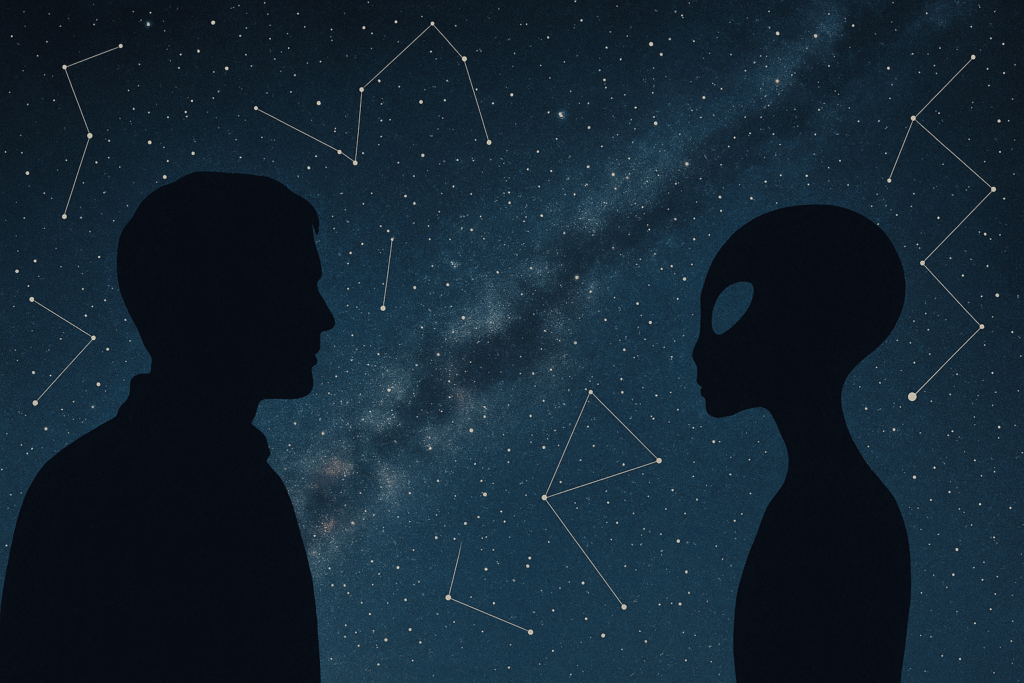
Have you ever wondered if ancient stories—like Greek myths or tribal legends—might actually be coded science? Like, what if they weren’t just cool tales about gods and monsters, but clever ways to preserve real knowledge?
Take the myth of Tiresias. Most people don’t know the full story, but it goes like this:
Tiresias was a man who one day stumbled upon two snakes mating in the wild. For unclear reasons (but very on-brand for Greek mythology), he struck them with a stick. Instantly, he was transformed into a woman. He lived for several years as a woman, got married, and even had children. Then, years later, he came across another pair of mating snakes—this time, he either struck them again or left them alone (depending on the version)—and he was turned back into a man.
Now here’s where it gets weirder: later, the gods Zeus and Hera got into an argument about who experiences more pleasure during sex—men or women. Since Tiresias had lived as both, they asked him. He said women have it better. Hera didn’t like the answer and blinded him. Zeus, feeling bad (and probably wanting to avoid the Olympian doghouse), gave Tiresias the gift of prophecy.
Wild story, right?
But what if there’s more to it than myth?
What if the transformation part was actually trying to preserve something deeper—like an ancient understanding of biological change, maybe even something that today we’d call gene manipulation? The ancients didn’t have the language for DNA or chromosomes, but they did have symbolism. Maybe snakes weren’t just snakes—they were metaphors for transformation, duality, rebirth.
If society ever hit the reset button after some massive cataclysm, wouldn’t our knowledge, language, and science vanish with it? Maybe all we’d leave behind are stories. And if we would do that, who’s to say they didn’t?
People today are already using AI to revisit ancient texts and reinterpret what they might’ve really meant. Some believe myths might encode real tech or scientific ideas. For example:
- Geopolymers: Some researchers think ancient builders may have used geopolymers—early forms of concrete—to cast blocks for the pyramids.
- Oral sea-level stories: Aboriginal stories in Australia have preserved accounts of sea-level rise over 7,000 years ago—scientifically confirmed.
- Oral tradition reliability: Oral traditions, in stable communities, can be more consistent than you think.
Yet, we tend to shrug off those stories as fantasy while accepting vaguer ones because they came from cultures with a writing system. That double standard feels a bit backward, doesn’t it?
Takeaway
Maybe it’s time we stop seeing myth as just fiction and start asking what truths they might be hiding. Stories outlast civilizations.
Maybe that’s the point.